The short answer
Documentary storytelling techniques are the choices that turn real events into a film people want to follow. The most important are a clear central question, a character whose experience carries it, a structure built around change, observed scenes that show rather than tell, interviews that bring memory and meaning, sound that leads the audience through, and an edit that finds the final shape. None of them invents anything: they decide what to film, what to keep and in what order.
A documentary has no script waiting to be performed. The story exists in people’s lives, in places and in events that will happen whether or not a camera is there. That is what makes documentary storytelling different from drama, and also what makes it difficult. You cannot write the scene you need; you have to recognise it, film it and then find where it belongs.
This guide sets out the storytelling techniques that matter most in documentary, from the first idea to the final cut. It is written for first-time filmmakers and students, and for anyone commissioning a documentary who wants to understand why some films hold an audience and others, with similar material, do not.
Start With a Question, Not a Subject
Most documentary ideas begin as a subject: a school, a musician, a campaign, a community, a period of history. A subject is a starting point, but it is not yet a story. A film “about” something tends to become a list of facts and opinions with no reason to end where it does.
A story needs a question the film sets out to answer. Not necessarily a question spoken aloud, but one the audience can feel underneath every scene:
- Will this person get what they want, and what will it cost them?
- What really happened, and why has it been told differently?
- What does it feel like to live through this, day after day?
- Can this idea work in practice, or only on paper?
The question gives every later decision a test. When you are deciding what to film, whom to interview or which scene to cut, ask whether it helps the audience towards the answer. Material that is interesting but unrelated to the question can be the hardest to let go of, and letting it go is often what makes a film clear.
The question may change. Filming regularly reveals that the real story is not the one you expected. That is not failure; it is the nature of documentary. Having a question at the start simply means you notice when the story moves.
Find the Character Who Carries the Story
Audiences follow people more readily than ideas. Even a film about a large subject, such as an industry, a political change or an education system, usually works best when the audience experiences it through one person or a small number of people.
A strong documentary character is not necessarily the most famous or articulate person available. What matters is that:
- They have something at stake in the story the film is telling.
- Their situation is likely to change during filming, or their past contains a change worth telling.
- They are willing to let you see more than the public version of themselves.
- The audience can understand the wider subject through what happens to them.
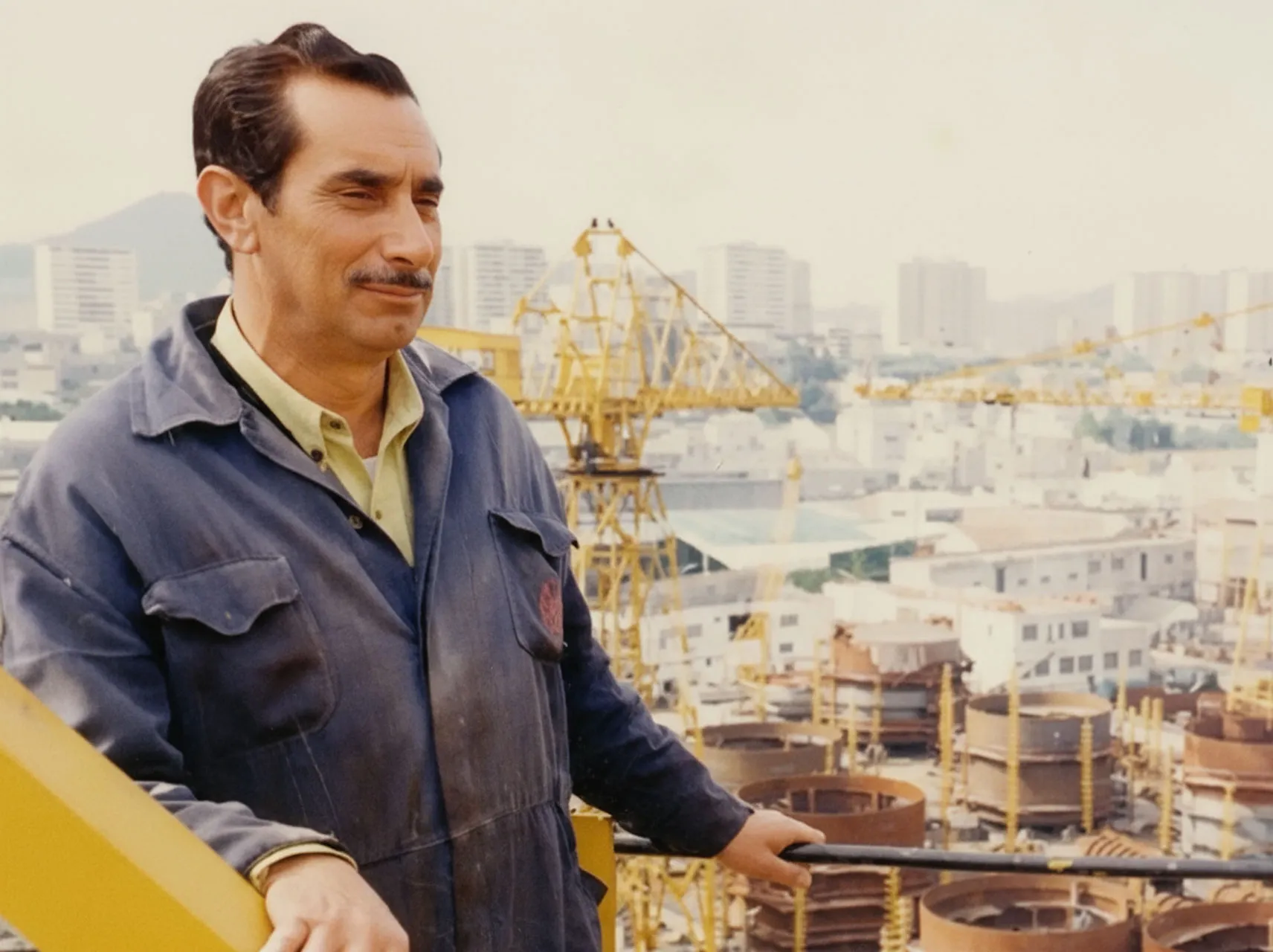
Steve Sklair’s film A Worker of the 20th Century, made for TVG in Galicia, tells the life story of Manuel Barros, a shipyard worker with communist leanings during the Franco dictatorship. A period of history becomes a single life the audience can follow. The Man Who Loves Gary Lineker, the BBC Video Diaries film that won the BAFTA for Best Single Documentary, works in the same way: a time of political transition in Albania is experienced through the personal diary of one man, Ylli Hasani, a rural doctor.
Finding that person, and earning their trust, is often the longest part of development. Our guide on how to approach interviewees for a documentary covers how to make that first approach.
Structure the Film Around Change
Structure is the order in which the audience meets information, people and events. In documentary it is rarely fixed in advance, but it is never left to chance either. A useful working assumption is that a story is about change: something is one way at the beginning and different by the end.
Common documentary structures include:
- Situation, complication, resolution. The familiar three-part shape: we meet a person or place, something disrupts it, and the film follows what happens as a result.
- The journey. The film follows a process, a physical trip or a period of time, such as a year in a school or the making of a performance. Progress through the journey provides the structure.
- The portrait. The film builds an understanding of one person. Each sequence reveals something new, so the audience’s view of them deepens or changes.
- The investigation. The film poses a question about what happened and moves through evidence and testimony towards an answer.
- Chronology with a frame. Events are told in order, but an opening scene from later in the story gives the audience a reason to watch how it came about.
These are tools, not formulas. Many films combine them. What they share is progression: every section should leave the audience knowing more, caring more or seeing the subject differently. If two sequences could swap places without anyone noticing, the structure is probably not yet doing its work.
Show, Then Explain
The most distinctive documentary storytelling technique is the observed scene: events filmed as they happen, with people doing rather than describing. An observed scene gives the audience behaviour, place and time. It lets them draw their own conclusions instead of being told what to think.
A scene of a teacher dealing with a difficult morning tells the audience more about a school than any number of interviews describing its values. A musician practising the same phrase again and again shows dedication more convincingly than someone saying they are dedicated.
Observation takes time. People need to become used to the camera before they stop performing for it, and the moments that matter rarely happen on schedule. Above All Compassion: The Story of XP School, Steve’s film about XP School in Doncaster and its expeditionary learning approach, was made as a three-year observational study for exactly that reason: a school’s story unfolds over terms and years, not over a single filming day.
Observation is also easier with fewer people in the room. A contributor facing one filmmaker behaves very differently from one facing a full crew, which is why small-crew documentary production suits so much observational work.
Explanation still has its place. The order matters: when the audience has seen something first, an interview or caption that explains it lands as an answer to a question they already have.
Use Interviews for Memory and Meaning
Interviews are often treated as the place where a documentary delivers its information. They can do that, but their real storytelling value lies elsewhere. An interview gives the audience a person’s memory, feeling, reasoning and point of view, things a camera cannot observe directly.
A few principles make interviews serve the story:
- Ask for moments, not summaries. “Tell me about the day you found out” produces a story; “How did it affect you?” tends to produce a general statement.
- Interview with the structure in mind. If you know what the film needs to establish, you can make sure someone says it clearly, in their own words, without leading them.
- Leave room for surprise. The most useful answer is often the one you did not plan for, which is why listening matters more than the question list.
- Keep the person, not just the content. Hesitation, humour and contradiction tell the audience who someone is.
Our guide to documentary interview techniques for authentic stories goes into preparation, framing and follow-up questions in more detail.
Narration, Captions and the Voice of the Film
Every documentary has a voice: the sense of who is telling the story and from what position. Deciding that voice early shapes how you film.
- Narration can carry information efficiently, connect scenes and supply context the footage cannot. It works best when it adds what the pictures do not, rather than describing what the audience can already see.
- Contributor-led films let the people in the film tell the story in their own words, with no narrator. This often feels more immediate, but it requires filming and interviewing with the structure in mind, because nobody can fill the gaps later.
- The first-person film places the filmmaker, or a contributor filming themselves, at the centre. The diary format of Video Diaries is an example: the story is told from inside one person’s life.
- Captions and title cards can supply a date, a fact or an outcome briefly and neutrally, without adding a narrator.
There is no right choice in general, only a right choice for a particular film and audience. What causes problems is an unclear voice: a film that drifts between styles without a reason.
Let Sound Lead the Story
Sound is one of the least visible documentary storytelling techniques and one of the most powerful. Audiences forgive imperfect pictures far more readily than poor sound, and much of a film’s structure is carried by what we hear.
A voice can begin before we see the speaker, leading us into a new scene. The sound of a place, a workshop, a playground or a quiet room, establishes where we are before any explanation. A pause, held in silence, can carry more weight than any line of dialogue.
None of this is possible without good location sound. Recording clean interviews, atmosphere and the sounds of the places you film gives the edit options it cannot create afterwards.
Archive as Evidence and Contrast
Photographs, documents, home movies and existing footage can bring the past into a story told in the present. Used well, archive does more than illustrate: it provides evidence, shows how much has changed, or sets what people remember against what was recorded at the time.
Archive also carries a responsibility. Material from one place or time should not be used to suggest a different event, and rights need to be cleared before the film is finished. Both are storytelling decisions as well as practical ones.
The Edit Is Where the Story Is Finally Written
In drama, the story is written before filming. In documentary, it is often written in the edit. Filming produces possibilities, and editing decides which of them become the film.
The editor’s storytelling work includes knowing all the material, finding the central question again in what was actually filmed, building a structure that gives each moment the right place and duration, and cutting anything that repeats or distracts. It is also where the film becomes honest or dishonest: the same footage can be ordered to clarify what happened or to distort it.
Because Steve began his career in editing before moving into camera and direction, he films with the edit in mind, which is one practical advantage of a filmmaker who directs, shoots and edits. For a fuller look at this stage, read how documentary editing shapes a story.
Holding Attention Over a Longer Film
Short films can survive on a single idea. Longer documentaries, of an hour or more, need more: the audience has to keep wanting to know what happens next. Steve learned this on Video Diaries, where most films ran to an hour or longer, and keeping people’s interest across a longer film has remained central to his work.
A few techniques help:
- Keep a question open. When one question is answered, another should already be forming.
- Vary the rhythm. Alternate interviews, observed scenes, quieter moments and sequences with movement.
- Release information when it matters. A fact revealed at the right moment can change how the audience understands everything before it.
- Cut repetition ruthlessly. Two good moments that make the same point are weaker than one.
- Let the audience breathe. Space after an important moment gives it time to land.
Common Storytelling Mistakes in Documentary
- Filming a subject without a question, then hoping the edit will find a story in material that was never gathered with one in mind.
- Relying on interviews alone, so the film becomes people talking about events the audience never sees.
- Explaining everything, leaving the audience nothing to notice or work out for themselves.
- Including everyone, so no single person’s experience carries the film.
- Letting music do the emotional work the material has not earned.
- Forcing a structure that the real events do not support.
Questions People Often Ask
What are the main documentary storytelling techniques?
The core techniques are finding a central question the film sets out to answer, choosing a character whose experience carries it, structuring the film around change, letting observed scenes show rather than tell, using interviews for memory and meaning rather than information alone, building sequences through sound, and making the final structure in the edit. Narration, archive and music are tools within that, not substitutes for it.
Does a documentary need a three-act structure?
Not necessarily. Many documentaries follow a recognisable shape of situation, complication and resolution, but others are built as a journey, a portrait, a chronology or an argument. What every documentary needs is a sense of progression: the audience should know more, feel differently or see the subject differently at the end than at the start.
How do you tell a story in a documentary without narration?
By letting the people and scenes carry it. Interviews can provide context in the contributors’ own words, observed scenes show events as they happen, and careful ordering in the edit lets the audience draw conclusions. Captions or a short title card can supply a fact the footage cannot. Without narration, planning what you need to film becomes even more important.
How do you keep a long documentary interesting?
Give the audience a reason to keep watching: a question that is not yet answered, a person they care about and something that is still at stake. Vary the rhythm between interviews, observed scenes and quieter moments, cut repetition, and let new information arrive when it changes how the audience understands what they have already seen.
Is it honest to shape a true story for a documentary?
Every documentary is shaped: choosing what to film, what to ask and what to keep is already storytelling. The line is crossed when shaping changes what actually happened, puts words in someone’s mouth or uses material to suggest an event it does not show. Honest storytelling makes reality clearer; it does not rearrange it into something else.
Stories Told With a Human Gaze
Steve Sklair is a BAFTA-winning documentary filmmaker based in London, with four decades of work for the BBC, Channel 4 and other UK broadcasters. He won the BAFTA for Best Single Documentary for The Man Who Loves Gary Lineker on the BBC’s Video Diaries, and a UNICEF award for Child Slave Rescue. As a BBC series producer he created the style and feel of first-run factual series, and his films since include Red Oil for Channel 4’s True Stories, the feature-length portrait Nicolas Economou, which he directed, wrote, shot and edited, and A Worker of the 20th Century for TVG. He directs, films and edits much of his own work.
If you have a story you want to tell and would like to talk through how it could work as a documentary, the documentary brief form is the best place to start.
Last updated: